How to visit Machu Picchu: a complete and authentic guide.
Machu Picchu is one of the 7 wonders of the modern world.
The journey to the Andes awakens deep dreams in travelers from all over the world. Many wish to visit the legendary Inca citadel in person.
However, planning this adventure requires attention to new logistical details. The local government has implemented significant changes recently.
Therefore, knowing how to visit Machu Picchu safely requires constant updating. This guide presents the necessary step-by-step process for your expedition. You will learn about new tour options and daily entry limits.
Furthermore, I will show you how to optimize your financial resources during the trip. My goal is to make your organization easier so you can focus on the immersive experience. This way, you’ll avoid common setbacks that affect many unprepared tourists. Proper preparation ensures the freedom to explore each gem at your own pace.
Ultimately, connecting with local history requires time and tranquility. Keep reading to transform this desire into a sustainable and unforgettable reality. Let’s pack your bags with environmental awareness and an adventurous spirit.
Why planning your visit to Machu Picchu is essential
Careful planning underpins the quality of any authentic trip. First, the new rules from 2026 imposed strict limits on the number of daily visitors.
The visitor limit has been increased to 5,600 people/day in the high season and 4,500/day in the low season, with 3 official circuits and 10 sub-circuits.
Consequently, tickets sell out quickly through all official channels. Those who ignore this reality risk wasting their entire trip. On the other hand, planning the itinerary allows for efficient financial control.
You save precious resources by booking trains and accommodations in advance. Furthermore, booking ahead avoids dependence on expensive agencies that charge exorbitant fees. Another crucial point concerns the preservation of historical heritage. Visiting Machu Picchu requires complete respect for the boundaries imposed to protect the archaeological site.
When you study the regulations, you directly contribute to the sustainability of the area. Furthermore, a well-structured itinerary reduces your carbon footprint. You choose less polluting transportation and support local Andean communities.
Finally, planning removes the anxiety from your journey. With the technical details sorted out, your mind opens up to cultural connection. The freedom to explore arises precisely when the logistics work perfectly.
Therefore, do not underestimate the value of solid preparation. It is the foundation for a fulfilling, transformative, and environmentally respectful Andean experience.
What to know before visiting Machu Picchu
Before you leave, you need to understand the basics about the region. Peru only requires an up-to-date identity document for Brazilians. However, a passport offers special recognition in your travel collection. Next, consider acclimatizing to the altitude.
Cusco and the Sacred Valley are located at very high altitudes. Therefore, I strongly recommend reserving the first two days for rest. This time helps your body adapt to the naturally thin air. As for costs, savings can be made by avoiding unnecessary tourist services. For example, staying in Aguas Calientes allows for better control of expenses.
There, you’ll find local options that offer authenticity and fair prices. Furthermore, the time needed for a complete visit varies depending on your interests. Generally, we dedicate four days to the classic itinerary.
It includes Lima, Cusco, the Sacred Valley, and the citadel itself. During this time, you gradually absorb the Quechua culture. Remember to bring reusable water bottles. Disposable plastic causes serious damage to the sensitive mountain ecosystem. Therefore, prioritize conscious consumption at every stage of the journey.
Use official digital tools to monitor the weather and trail conditions. With these precautions, you’ll be ready to start your adventure with confidence and ease.
Step-by-step guide on how to visit Machu Picchu in 2026.
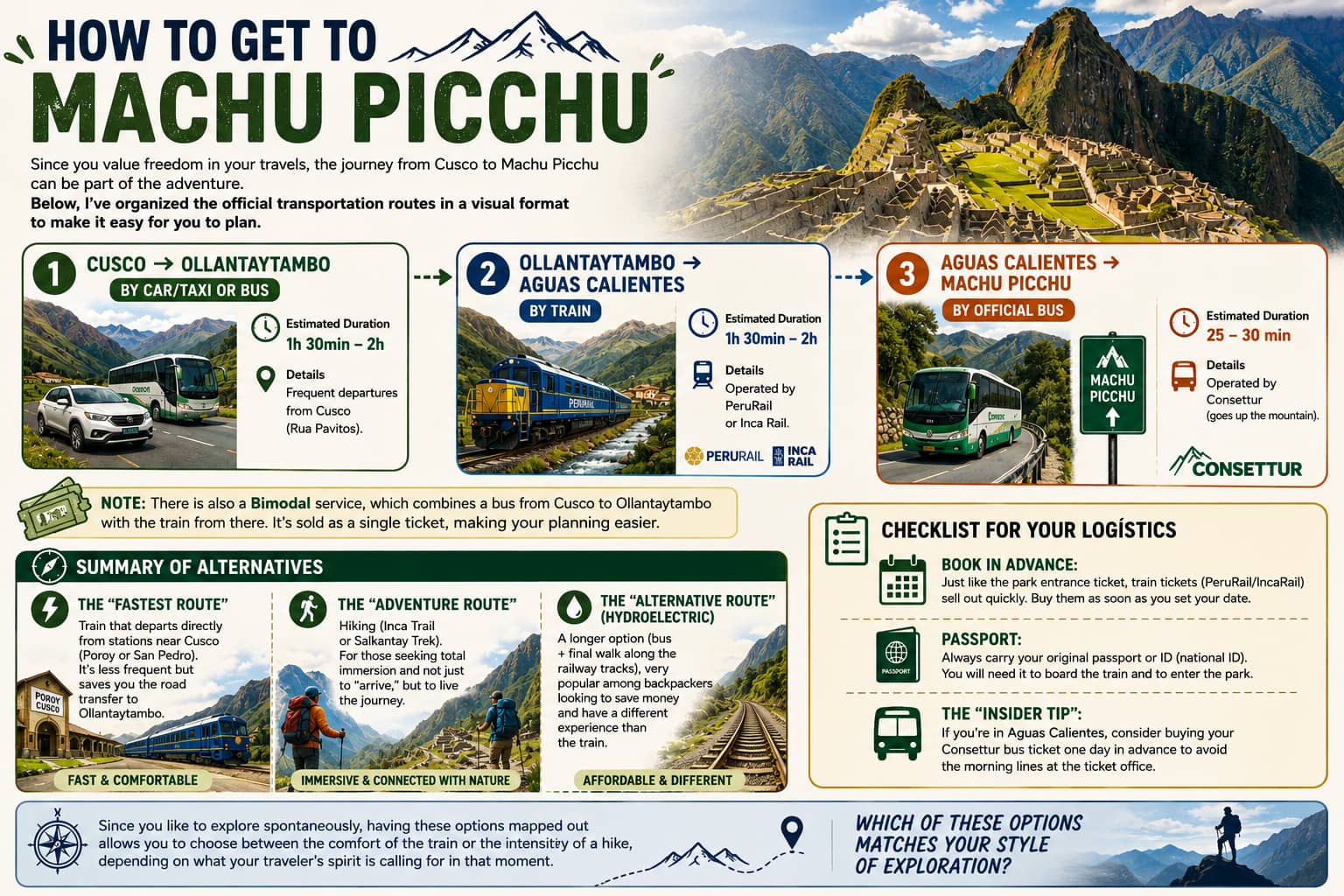
Now, follow this organized method to ensure a memorable journey.
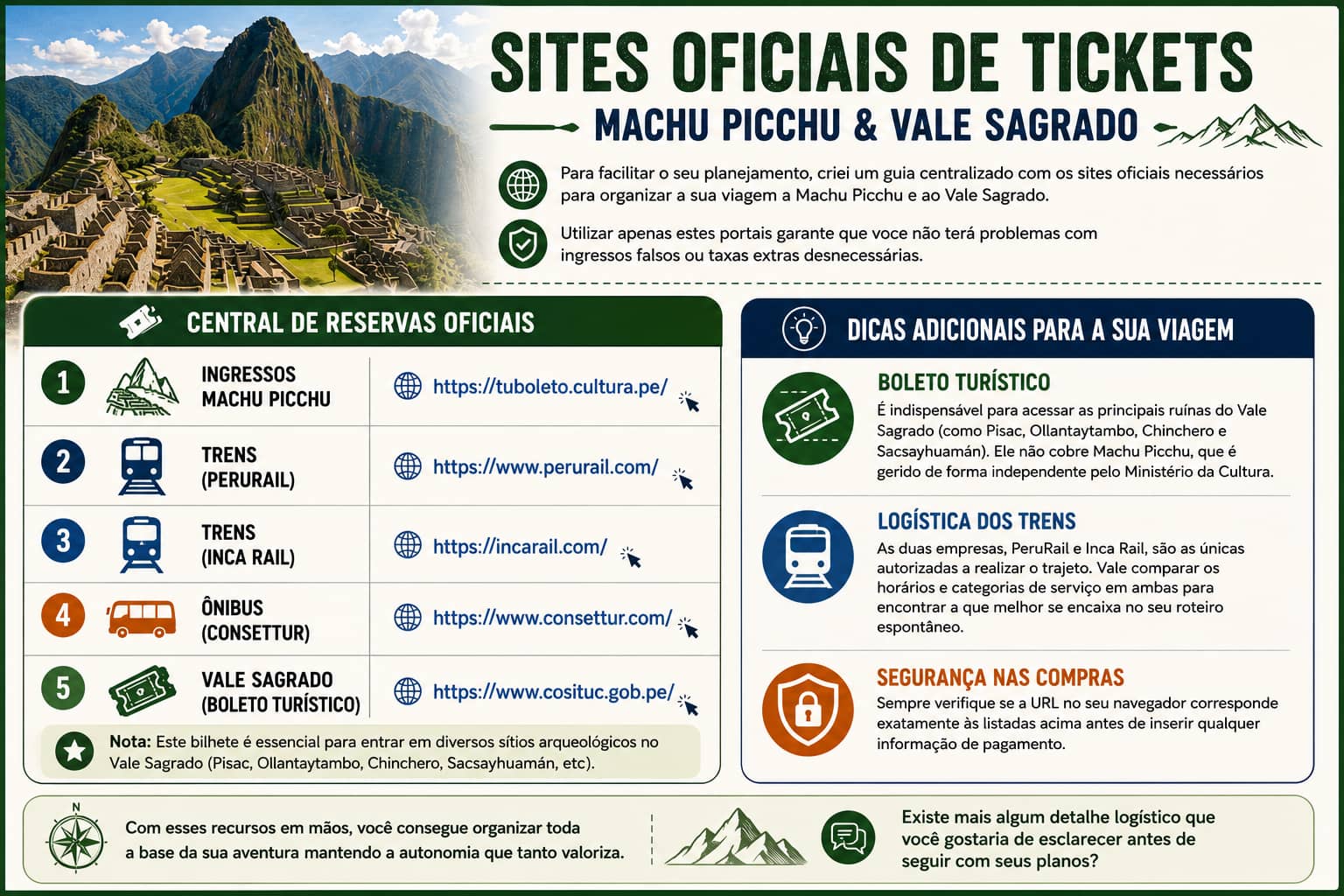
Step 1 – Purchase your tickets on the official Peruvian government website. Carefully choose one of the new tours available. Always check date availability before booking flights.
NOTE: Due to capacity limits and peak season, if you plan to hike the trails, you need to book months in advance. June, July, and August are considered the busiest months, coinciding with summer vacations in the Northern Hemisphere and important cultural festivals such as Inti Raymi (June 24th).
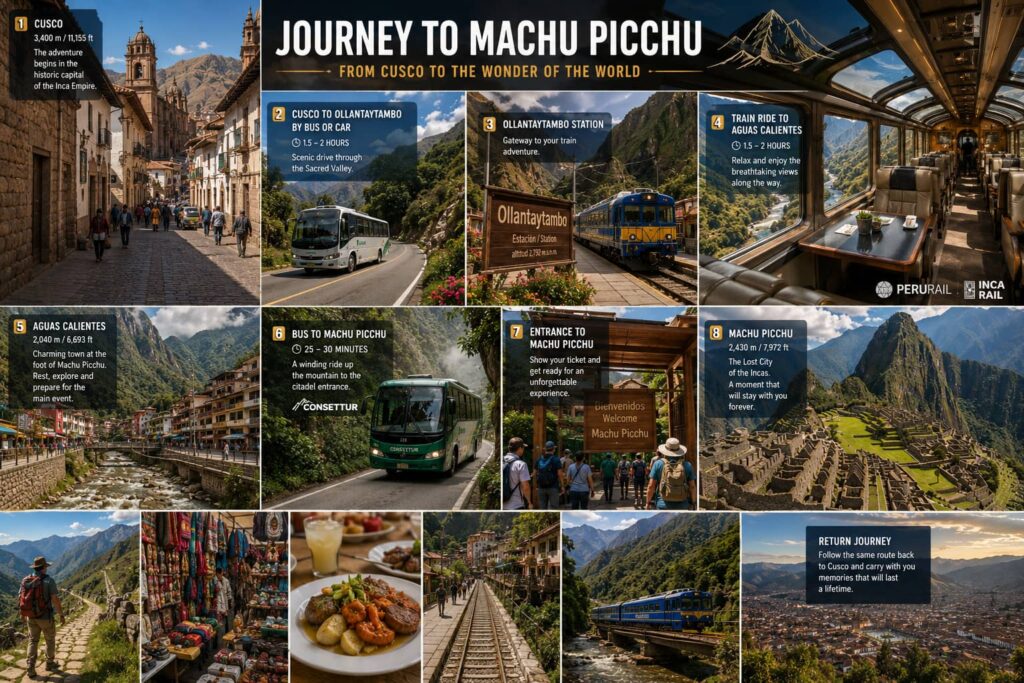
Step 2 – Plan your transportation logistics in Peru. The ideal itinerary starts in Lima, continues to Cusco, and crosses the Sacred Valley. This way, you can visit historical cities before reaching the mountains.
Step 3 – Book the train from Ollantaytambo to Aguas Calientes. Choose times that allow you to stay overnight in the village. This makes it easier to arrive at Machu Picchu very early.
Step 4 – Experience the sunrise at Machu Picchu. Arriving in the early hours guarantees soft light and less crowding. The energy of the sunrise among the mountains is indescribable.
Step 5 – Follow the guards’ instructions throughout the entire internal route. The new circuits have mandatory flows to prevent erosion. Respect each marking to preserve the historical monument.
Step 6 – Conclude the experience by talking to local residents about their stories. They bring a perspective that no printed guide can convey. This human interaction represents the pinnacle of any authentic exploration.
By following these steps, you balance logistics with deep cultural immersion. The technical organization allows you to enjoy the silence and magnitude of the Inca stones.
Essential tips for your Andean adventure
There are simple strategies that improve the quality of the hike. First, carry only the essentials in your daypack. Excess weight causes fatigue quickly due to the high altitude of the region. Also, wear hiking shoes that are already well broken in.
Stone surfaces require stability and constant comfort to avoid injuries. On the other hand, prioritize snacks bought at local markets in Cusco. They are cheaper and reduce the use of disposable plastic packaging. Another valuable tip involves mindful photography on site.
Take fewer photos and observe the surrounding architectural details more. Certainly, capturing the feeling of the wind in the ruins is worth more than a thousand digital files. If you feel tired, stop and breathe deeply during the tour. Andean nature always invites a slow and contemplative pace.
If possible, hire an official guide directly at the entrance to the archaeological park. This guarantees income for local residents and enriches your learning experience. Furthermore, please maintain silence in the rest areas of the citadel. Respect for the sacred space strengthens the energy that everyone seeks there.
Finally, take advantage of connecting with other travelers in the village of Aguas Calientes. Sharing experiences creates bonds that last far beyond the trip.
Common mistakes when planning a trip
Many travelers make mistakes that spoil the pleasure of discovery. The main mistake is buying tickets without checking the chosen route. Each itinerary has specific limitations on access to monuments. Consequently, you may miss out on seeing iconic parts of the citadel.
Another common misconception involves underestimating altitude sickness in Cusco. Attempting to climb the mountain on the same day as arrival causes extreme fatigue. Therefore, physical well-being should always be your absolute priority. Similarly, avoid carrying heavy luggage on tourist trains.
Companies have strict rules regarding the amount of luggage allowed inside the train cars. Therefore, leave any excess luggage at your hotel in Cusco before departing. Furthermore, never leave organic or inorganic waste along the Inca trails. Unpredatory tourism causes permanent damage to this fragile ecosystem. Therefore, handle your trash responsibly at all times.
Another common mistake is relying solely on bank cards. Small businesses in the Sacred Valley operate primarily with local currency. Having cash facilitates authentic purchases and ensures your financial independence. Finally, don’t try to rush through the archaeological site.
Haste hinders the perception of subtle details of local history. Learn to observe with patience and respect for boundaries. Avoiding these missteps ensures a fluid, economical, and truly unforgettable experience.
Is it worth visiting Machu Picchu this way?
Certainly, this strategy is well worth it for the conscious traveler. Firstly, planning ahead eliminates avoidable frustrations. You arrive in Peru with the security of having your entry guaranteed. Furthermore, the sustainable approach generates real resource savings. By choosing local services and avoiding waste, your money goes much further.
On the other hand, some people prefer the comfort of expensive tour packages. However, these models limit their freedom to explore spontaneously. Consequently, you lose the chance to truly interact with the local culture. In contrast, our way of traveling prioritizes genuine human connection.
When you decide how to visit Machu Picchu, you take ownership of the journey. Therefore, each discovery has a much deeper and more personal meaning. Although the new rules require discipline, they also protect the integrity of the site. In other words, the experience becomes better for all visitors. Indeed, hiking in the mountains requires physical effort rewarded by beauty.
The feeling of autonomy during exploration surpasses any comfort offered by pre-planned itineraries. Therefore, prepare intelligently and responsibly to experience this unique moment. The emotional reward of a trip planned by yourself is priceless. Enjoy every second of freedom in one of the wonders of our world.
Conclusion
Planning your trip to Machu Picchu becomes an act of respect. By following this guide, you ensure your visit is sustainable. After all, the citadel requires conservation to continue existing for centuries. Remember to organize your itinerary between Lima, Cusco, and the Sacred Valley.
This sequence allows for a gradual immersion in the fascinating Peruvian culture. Furthermore, the new rules of 2026 protect everyone’s experience. Therefore, follow the circuits and schedules with complete dedication. The connection with the sunrise in the mountains makes all the planning effort worthwhile. In fact, the simplicity of walking among ruins teaches valuable lessons about the world.
You learn to value the essential and discard unnecessary excesses. I invite you to apply these tips to your own Andean adventure. The world awaits travelers who seek authenticity and real human connections. After reading this guide, you have the tools to act autonomously. Now, start your bookings and prepare your heart for intense emotions. I hope to meet your stories along the way soon.
Ultimately, each traveler brings a unique perspective to the same places. Finally, always keep your focus on preservation and enthusiasm. Have a good trip, and may Peru provide you with a profound and lasting transformation.
Frequently Asked Questions
When is the best time to visit Machu Picchu?
The dry season, between May and October, offers clear days. However, be prepared for cold nights. The time of year you choose directly influences your visibility.
How much does it cost on average?
Expenses vary depending on your style. Set aside at least three hundred dollars for tickets and trains. The rest depends on your desired level of comfort.
Is hiring a guide mandatory?
Yes, the new rules from 2026 require accredited guides. The measure aims to protect the physical structure and provide accurate historical information to visitors.
How long does it take to tour Machu Picchu?
The circuit inside thecitadelIt takes about three hours. However, acclimatizing in Cusco requires two full days before the final ascent.
Is it possible to visit without a pre-planned itinerary?
Yes, you can organize everything independently. This freedom simply requires prior research of official websites to avoid common technical problems.
How to save resources?
Avoid external agencies and buy tickets from official websites. Staying in Aguas Calientes and bringing basic snacks reduces costs and decreases plastic waste.
When is the best time to visit Machu Picchu?
The dry season, between May and October, offers clear days. However, be prepared for cold nights. The time of year you choose directly influences your visibility.
How much does it cost on average?
Expenses vary depending on your style. Set aside at least three hundred dollars for tickets and trains. The rest depends on your desired level of comfort.
Is hiring a guide mandatory?
Yes, the new rules from 2026 require accredited guides. The measure aims to protect the physical structure and provide accurate historical information to visitors.
How long does it take to tour Machu Picchu?
The circuit inside thecitadelIt takes about three hours. However, acclimatizing in Cusco requires two full days before the final ascent.
Is it possible to visit without a pre-planned itinerary?
Yes, you can organize everything independently. This freedom simply requires prior research of official websites to avoid common technical problems.
How to save resources?
Avoid external agencies and buy tickets from official websites. Staying in Aguas Calientes and bringing basic snacks reduces costs and decreases plastic waste.