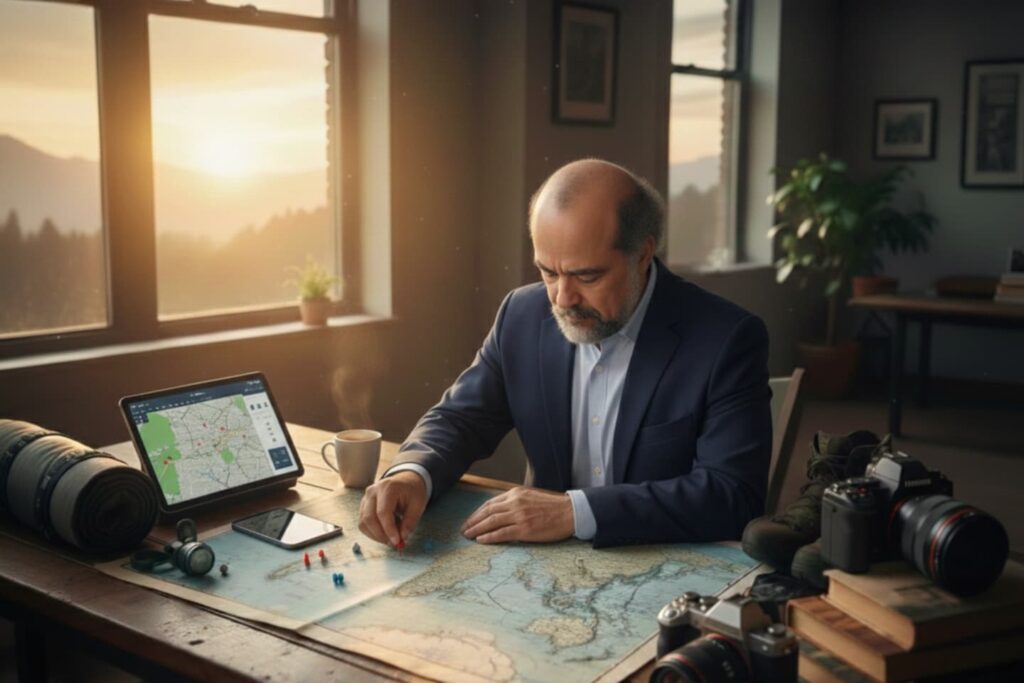
The Awakening of the Independent Traveler
Traveling is undoubtedly one of the most enriching experiences we can have in life. However, to fully enjoy each moment without setbacks, knowing how to plan your trip from scratch becomes essential knowledge.
This organizational process requires a series of fundamental decisions, the first of which is usually the most decisive for the style of the journey.
You must decide promptly whether you prefer to organize the trip completely independently or whether you prefer to rely on the assistance of a traditional travel agency.
This guide was written specifically for those seeking the freedom to travel on their own. However, this does not prevent someone interested in agency packages from learning the fundamentals presented here.
Each type of trip presents distinct advantages and disadvantages that need to be carefully weighed. Therefore, understanding these points of divergence will help you make a much more informed and conscious decision.
Below, I present a clear comparison between planning an independent trip and opting for a travel agency.
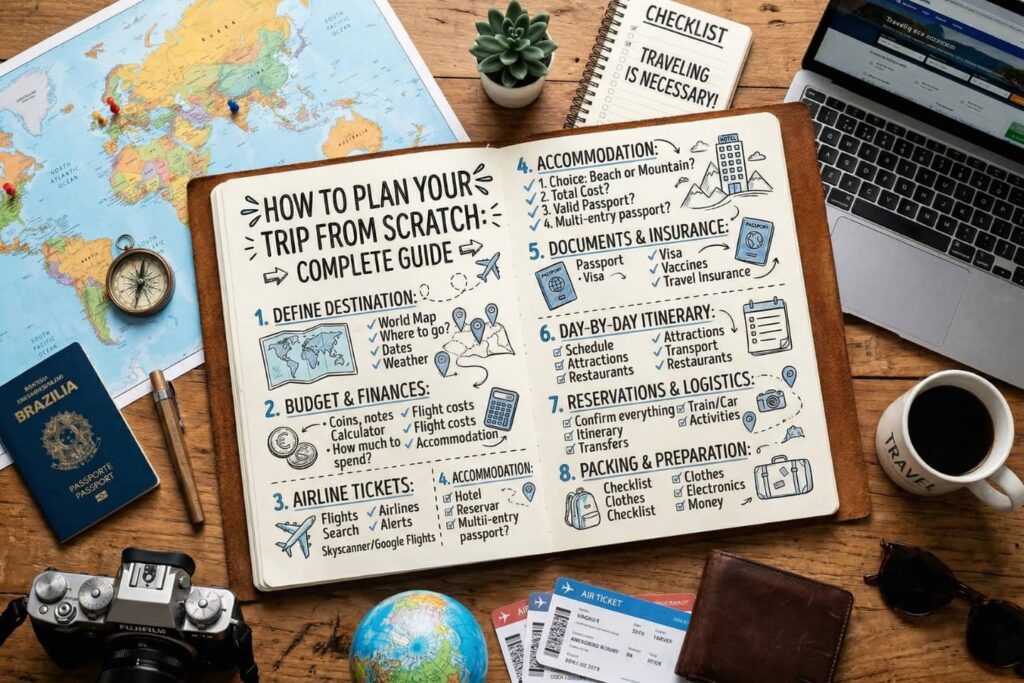
Planning Your Trip from Scratch: Freedom or Convenience?
Traveling independently has become an increasingly common practice among adventure enthusiasts.
After all, we live in an era where countless online tools facilitate the entire logistical process.
By choosing to plan your trip from scratch, you take control of your destiny, which provides unique satisfaction.
Advantages of Planning a Trip Alone
- More freedom in the itinerary: You have the power to decide on absolutely everything: the chosen destination, the total length of stay, the attractions visited, and the pace of the walks. Furthermore, you can change the plan at any time if you feel a place deserves more than just a few hours of attention.
- Possibility of saving money: By dedicating time to researching flights, accommodation, and tours, it’s perfectly possible to find great deals that agencies rarely offer.
- More authentic experience: Traveling independently allows you to explore places less frequented by mass tourism. This makes it possible to experience much more closely the local culture and the daily reality of the people.
- Total flexibility: If a sudden urge arises to change cities or spend more time in a charming village, simply rearrange your plans without bureaucracy.
- Control over the trip: You choose exactly where you prefer to sleep, where you want to eat, and which experiences truly make sense for your personal profile.
However, planning alone is not enough; we also have to keep an eye on mistakes.
Because they can ruin a good plan. The 11 Mistakes That Make Your Trip More Expensive: Learn How to Avoid Them.
The Challenges of the Independent Journey
Despite all the benefits mentioned, independent planning also requires a genuine commitment from the traveler. It’s not all roses when we decide to carry all the responsibility for logistics in our backpacks. It’s necessary to be aware that planning your trip from scratch demands patience and a considerable amount of organization.
Disadvantages of Independent Planning
- Requires research time: Organizing every detail involves exhaustively comparing prices, studying the history of the destination, and understanding how transportation works.
- Greater responsibility: All operational details are entirely your responsibility, from hotel reservations to validating necessary documents.
- Possibility of errors: Those who don’t yet have extensive experience may make mistakes in the initial planning, such as choosing poorly located accommodation or underestimating the distances between tourist attractions.
- Limited support: If a serious unforeseen event occurs during the trip, it will be necessary to remain calm and resolve everything on your own, without the assistance of a readily available consultant.
The Role of Travel Agencies
Travel agencies still occupy a significant space, as they handle much of the bureaucratic organization of the trip. This can bring immediate peace of mind to many travelers with tight schedules. However, this convenience usually comes at a price, both financially and in the loss of spontaneity.
Advantages of Traveling with an Agency
- More practicality: The company organizes flights, accommodation, transfers, and main tours, leaving the traveler with few immediate worries.
- Security in planning: Specialized professionals have in-depth knowledge of the destinations and help avoid basic logistical errors.
- Constant support: If any technical problem or cancellation arises, the agency is obligated to assist in resolving the conflict.
- Structured itineraries: For those who prefer a predictable journey, the packages offer itineraries that guarantee visits to the most famous places.
- Time saving: Those who cannot dedicate many hours to studying the destination find in the agency a quick and efficient solution.
The Limitations of the Closed Package
While convenience is appealing, the agency model can profoundly limit the cultural immersion we all seek. By planning your trip from scratch, you escape the rigidity that commercial structures impose on travelers. It’s crucial to consider whether comfort compensates for the loss of freedom of discovery.
Disadvantages of Traveling with an Agency
- Less flexibility: Itineraries are defined well in advance, and for this reason, changes to plans during the trip are often difficult or impossible.
- Generally higher cost: Tour packages usually include service fees, sales commissions, and considerable profit margins.
- Less personalized experience: Trips tend to follow standardized itineraries, focusing only on popular attractions and ignoring the hidden essence of the place.
- Pre-defined pace: In group trips, schedules and activities are programmed to satisfy the average traveler, which can be frustrating for those who want to go further.
Organizing an adventure is never as simple as it seems at first glance. Due to the immense amount of information available on the internet, it’s perfectly normal to feel overwhelmed. However, with the right organization, you can avoid unexpected problems and enjoy every moment with peace of mind.
Starting the Plan: Self-Knowledge
To plan your truly ideal trip from scratch, the best way is to start by defining your deepest desires. Before looking at maps, look at yourself and understand what you seek on this journey. Furthermore, having a clear vision of who you are helps shape an experience that makes sense for your story.
What type of traveler are you? One of the factors that most influences final satisfaction is recognizing your own preferences. Nothing is more frustrating than expecting a contemplative experience and finding a chaotic environment.
Therefore, when planning your trip from scratch, it’s necessary to know yourself honestly.
This makes it much easier to find the destination that resonates with your soul. The better you tailor the trip to your personal style, the more transformative the experience of seeing the world will be. Here are some classic profiles to guide you during your initial reflection:
- Standard tourist: Follows pre-packaged tours and prefers the comfort of the familiar.
- Explorer tourist: Follows most of the major attractions, but always looks for an alternative trail.
- Independent tourist: Avoids mass tourism, prioritizes autonomy, and seeks genuine human connections.
- Luxury tourist: Values extreme comfort, exclusivity, and top-tier services.
- Business tourist: Travels with a focus on professional goals, but may take advantage of opportunities to explore.
How to travel more and better:
From beginner to seasoned traveler, start here.
Defining the Purpose and Goal
The purpose of a trip can vary drastically depending on your life goals at that moment. Identifying this motivation helps maintain focus throughout the process of planning your trip from scratch. A trip focused on rest requires completely different logistics than one focused on studies.
The main types of purposes include pure leisure, work, academic studies, or the pursuit of health and well-being. There are also those who travel to participate in cultural events, do volunteer work, or follow religious and gastronomic itineraries. Each of these choices dictates the tone of your future adventure.
In addition to the purpose, the length of stay is a fundamental pillar of the organization. The available time determines logistical feasibility and, consequently, the financial impact on your wallet. We can classify trips into three major time blocks:
- Short trips (1 to 4 days): Excellent for quick weekend getaways or occasional holidays.
- Standard trips (1 to 2 weeks): Offer a healthy balance between intense exploration and necessary rest.
- Long trips (more than two weeks): Allow for deep immersion and the possibility of visiting multiple destinations on a single itinerary.
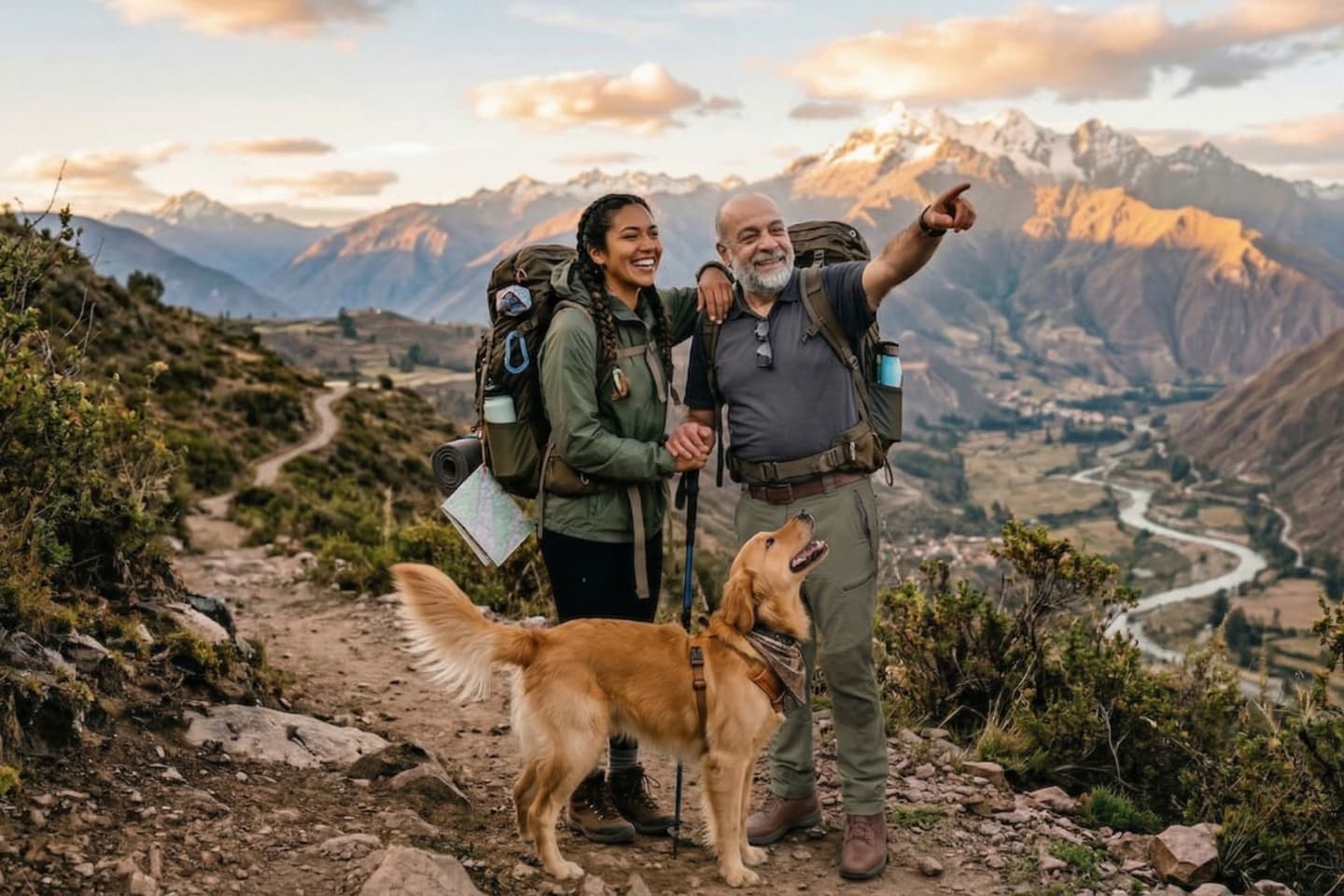
Choosing the right company for your trip.
Knowing who you’ll be sharing your days with is essential for successfully planning your trip from scratch. The right company can elevate the experience, while a wrong choice can create unnecessary tension.
It’s vital that everyone involved openly discusses their expectations before finalizing any reservations.
Lifestyle compatibility is the first point to consider carefully. Some people wake up early for hiking, while others prefer nightlife and morning rest.
Adjusting to these differences in pace is fundamental to maintaining group harmony and avoiding preventable conflicts.
Preferences for types of excursions should also be clearly aligned. While one traveler desires secluded beaches, another may be eager for art museums or snowy mountains.
Furthermore, intense cohabitation requires patience and a clear definition of responsibilities, such as who will handle flights or finances.
Finally, consider the personal needs and restrictions of each individual. Some people have mobility limitations or severe dietary restrictions that influence their choice of destination.
Respecting these individual differences is an act of empathy that ensures a pleasant journey for all travel companions.
The importance of consciously planning your trip from scratch.
Planning your trip from scratch is not only a powerful tool but also an act of respect for your chosen destination.
Furthermore, it’s a tool for multiplying your adventures. When we research in advance, we identify cheaper forms of transportation.
We can choose trains or routes that can be done on foot. Planning also helps us avoid unnecessary expenses.
This applies to both money and precious natural resources.
Those who prepare bring their own reusable water bottle. This traveler knows where to find water supply points. They also only take essential luggage to avoid extra fees.
Moreover, choosing accommodations that value the local economy is a smart strategy.
By booking sustainable places, you contribute to the preservation of world heritage. Thus, your trip leaves a positive and lasting impact on the community.
Traveling consciously requires prior study and dedication. However, the result is a much deeper connection with the land.
I learned that this way you understand the people who inhabit it better.
In addition to financial savings, it helps you travel more and better. We can’t forget about personal planning, as it influences your trip.
Resource savings and time optimization
Financial management is vital for travelers. Undoubtedly, traveling without a budget shortens your adventure. When you understand average costs, your money goes much further. Consequently, this saving allows you to stay longer on the road. You can invest in immersive experiences that truly matter to your story.
- Research public transportation options at your destination in advance.
- Identify local markets to avoid expensive meals in tourist areas.
- Understand visa requirements to avoid unexpected fines.
Therefore, knowing how to plan your trip from scratch directly impacts your wallet. A prepared traveler takes advantage of the best opportunities along the way.
Furthermore, financial predictability brings necessary peace of mind. This makes a difference before, during, and after your journey around the world.
How to maintain spontaneity in a script.
While planning is essential, it must have some free time. I always leave empty days in my personal schedule. I do this to follow recommendations from people I meet on the road.
If a conversation reveals a hidden village, I change my route.
On my trip around the world, I met a Belgian couple in China. They recommended I visit Bruges, which I had never heard of. And it was wonderful.
If a place enchants me, I decide to stay longer. However, I only do this because my logistical base is solid.
- Define the main points without setting rigid schedules.
- Keep a list of alternatives in case of failure.
- Prioritize cultural immersion instead of just checking off tourist spots.
In short, the importance of planning your trip from scratch lies in safety. This safety allows you to jump into the unknown with complete confidence.
Life is short and the world is too vast. Therefore, exploring without a strategy can waste valuable moments of connection.
Prioritizing spending consciously and purposefully.
Food is another pillar where planning becomes essential. By organizing your meals, you avoid falling into tourist traps. Buying ingredients at street markets drastically reduces your costs.
Furthermore, this is an opportunity to experience authentic local flavors. You learn traditional recipes directly from the locals.
At this point, the act of planning a trip becomes pure learning.
Regarding payment methods, use modern multi-currency cards. This avoids abusive bank fees and protects your assets.
Also, set aside a portion of your budget for spontaneous experiences. Avoid private transportation if public transport is efficient. Consequently, by reducing unnecessary expenses, you gain real freedom.
I prefer to spend money on a local guide than on luxury tours.
The priority should always be genuine human connection. Seek the authenticity of the experience lived in each new territory.
Emergency fund and financial sustainability
Every experienced traveler knows that unexpected events always happen. Therefore, maintaining an emergency fund is vital. This amount should remain untouched during your normal journey.
It covers health problems or flight changes. However, security isn’t complete without travel insurance. Not everything can be predicted with just good planning.
- Calculate the local cost of living before crossing the border.
- Monitor your expenses daily through apps or notebooks.
- Practice detachment from material possessions to avoid extra baggage costs.
Furthermore, financial sustainability is linked to conscious consumption. By avoiding waste, you help the planet and your wallet. Traveling simply is the richest way to see the world. When we remove the excess, only the essentials remain for our evolution.
Therefore, look at your finances as the fuel for transformation. Every penny saved represents an extra kilometer of discovery. The world awaits those who have the wisdom to organize themselves.
Thus, you will have the strength to stay on the road for much longer.
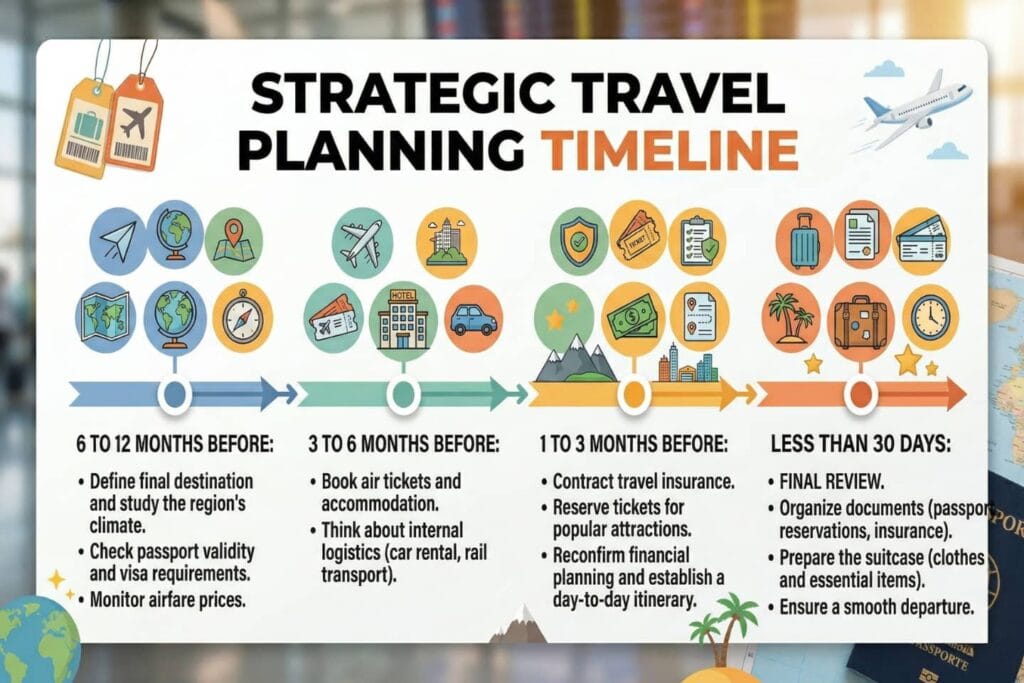
Strategic Action Plan
To make your life easier, I’ve created a timeline of what needs to be done at each stage of the process of planning your trip from scratch. Remember that this is a general structure that can be adapted to your personal style. The important thing is to maintain consistency in your research so you don’t leave anything important behind.
- 6 to 12 months before: Ideal time to define your final destination and study the region’s climate. Check passport validity, visa requirements, and start monitoring airfare prices.
- 3 to 6 months before: Excellent period to finalize ticket purchases and book accommodations. Also start thinking about internal logistics, such as car rentals or rail transport.
- 1 to 3 months before: Time to finalize the smaller details, such as purchasing travel insurance and booking tickets for popular attractions. Reconfirm your financial plan and establish a day-by-day itinerary.
- Less than 30 days: Final review time. Focus on organizing documents, packing your bags, and ensuring all essential items are ready for departure.
Planning Your Trip from Scratch - In Practice
1 – Choosing Your Destination Wisely
The first and most exciting decision for any traveler is to define where to point their compass. Knowing exactly your destination is the foundation for ensuring an experience without unpleasant surprises. With the place defined, the path becomes visible and it becomes much simpler to plan your trip from scratch.
It’s much more efficient to create an action plan for “Paris in the summer” than for a vague “I’m going to Europe.” Specificity eliminates the paralysis of choice and allows you to focus on the real needs of that location. Without a geographical definition, it becomes almost impossible to move forward in the next steps of the organization.
There are determining factors that you should consider when deciding on your destination. The available budget is the first, as it dictates the length of stay and the level of comfort. The climate is also vital, as are your personal interests and ease of access to the location, including bureaucratic issues such as visa requirements.
2 – Defining a Realistic Budget
Having clarity about the amount of money available is a mandatory step for anyone who wants to plan their trip from scratch. A well-structured budget avoids unpleasant surprises and ensures that you enjoy the journey with peace of mind. Money shouldn’t be a master, but rather a tool for your freedom.
Unfortunately, the budget is one of the main limitations of great adventures. It can define not only the destination, but also how you will eat and get around. It’s essential to be honest with yourself: there’s no point in planning fifteen days in an expensive capital if resources are scarce.
Always consider the main costs that make up the travel spreadsheet. Flights are usually the biggest investment, followed by accommodation and daily meals.
Don’t forget to include local transportation, such as subway and bus, and the costs of tours. Having a reserve for unforeseen events is what differentiates an experienced traveler from a novice in trouble.
See how financial planning should be for a traveler’s life
3 – When to Go: Climate and Seasonality
The timing of your trip directly influences the success of your journey and your stress level. There’s a huge difference between visiting a place next week or in four months. When planning your trip from scratch, you should meticulously study tourist seasonality.
The climate is the sovereign factor influencing everything from the weight of your luggage to the feasibility of outdoor activities. Furthermore, it directly affects your health and safety in certain areas. A city can be vibrant and welcoming in the fall, but become gray and inaccessible during a harsh winter.
Beyond climate issues, consider the flow of people. Accommodation, restaurant, and ticket costs fluctuate drastically according to demand.
Traveling during the “shoulder period”—between high and low season—is usually the smartest choice for those seeking a balance between good weather and fair prices.
4 – Mapping Attractions and Activities
Knowing which activities you intend to do allows you to allocate your time and money resources intelligently. When planning your trip from scratch, this step helps you discover if you need to make advance reservations to guarantee entry to popular museums or national parks.
Always keep in mind that many attractions offer significant discounts for those who buy online in advance. Besides saving money, you save precious hours that would be wasted in long lines under the sun or rain. Prior knowledge of activities optimizes your daily flow of discoveries.
When selecting what to visit, try to mix famous tourist spots with places frequented only by the local community. This mix ensures that you see historical landmarks, but also feel the real pulse of life in the destination. Authenticity is often hidden in a side street that doesn’t appear in hardcover guidebooks.
5 – Mastering Transportation
One of the golden tips for a perfect trip is to research public transportation well in advance. Imagine the stress of arriving at a foreign airport and not knowing how to get to your accommodation. By planning your trip from scratch, this research prevents you from spending a fortune on last-minute taxis.
This information is the basis for efficiently planning your daily itinerary. Although taxis or ride-sharing apps seem convenient, using them systematically can quickly drain your budget. Public transportation, besides being more environmentally friendly, allows you to observe urban dynamics from a much more realistic point of view.
Before leaving, find as much detail as possible about metro lines, bus routes, and operating hours. Also check if there are daily or weekly passes that reduce the cost of tickets for tourists.
With this information in hand, you will move around the city with the confidence of a local.
6 – Day-by-Day Itinerary: Balance and Flow
A good itinerary is one that respects your pace, your interests, and your energy level. I firmly believe in balanced planning, where the essentials are scheduled, but there’s room for the unexpected. When planning your trip from scratch, avoid the trap of trying to see absolutely everything in a single day.
Start by listing the must-see attractions and try not to visit more than one intense activity per period (morning, afternoon, and evening). Use tools like Google Maps to group these points by geographical proximity, minimizing time wasted on unnecessary travel. Always estimate an average time for each visit:
Main attractions: Reserve 2 to 4 hours for museums or complex monuments.
Points of contemplation: Squares, statues, and gardens usually take 30 minutes to 1 hour.
Markets and fairs: Allow between 1 and 2 hours to explore local flavors.
Guided tours: These vary greatly, but generally require a block of 4 hours. Always set aside ample time to simply sit in a café, people-watch, and soak up the atmosphere.
Rest is an integral part of the travel experience, not a waste of time.
7 – Calculating the Real Cost of Your Trip
To know the effective cost of a trip, you need to research several factors that affect the final budget. When planning your trip from scratch, use comparison platforms to get real and up-to-date figures. Here is a checklist of items you should consider to avoid surprises:
Flights and Transportation: Use websites like Skyscanner and Google Flights to monitor flights and include the costs of trains or car rentals.
Accommodation: Check Booking, Airbnb, and Hostelworld, confirming extra fees such as city taxes or cleaning fees, in addition to the daily rate.
Food: Research the average price of meals and consider the cost of shopping at local markets, TripAdvisor, or Google Maps.
Travel Insurance: Never ignore this item, as it is your guarantee of medical and legal assistance. Check with AssistCard and World Nomads.
Exchange Rates and Fees: Be aware of conversion rates and taxes on international withdrawals.
Visas and Documents: Some entry authorizations have high costs that should be anticipated.
8 – Safety as a Top Priority
Many people focus only on the stunning landscapes and forget to research the safety of their destination. However, understanding the local reality is what allows you to enjoy the experience with the necessary peace of mind. When planning your trip from scratch, dedicating time to this aspect is proof of intelligence and maturity.
Understanding which areas should be avoided, especially at night, helps you choose better-located accommodation. A hotel in a safe and busy neighborhood provides comfort for walking the streets without fear.
Furthermore, knowing the local safety situation helps identify and avoid common scams targeting unsuspecting tourists.
Researching accounts from other travelers in online forums and communities is an excellent way to prepare. By knowing what suspicious approaches or theft tactics are used in crowded areas, you become a much more difficult target.
Traveling informed increases your sense of control and allows you to truly relax during your sightseeing.
Be aware of these 13 travel scams to help you prepare and stay safe.
9 – Sustainability and Economy in the Kitchen
Eating out for every meal is a habit that often significantly impacts the budget. Therefore, a strategy I always recommend when planning your trip from scratch is to take advantage of your accommodation’s kitchen. With the growth of room rental platforms, many homes offer fully functional kitchens.
Even if you don’t intend to cook elaborate dishes, preparing your own breakfast or a light dinner already represents a formidable saving. Furthermore, going out for sightseeing with practical snacks in your backpack prevents you from paying inflated prices at tourist spots.
This practice also has a sustainable aspect, as it reduces the consumption of disposable fast-food packaging. Buying fresh ingredients at local markets is also a wonderful way to interact with the community and discover new flavors. You save money and also gain time to enjoy your destination calmly.
10 – Strategies for Booking Accommodations
With the travel dates defined, the next step is to secure where you will rest your head. When planning your trip from scratch, your booking strategy depends on the length of your journey. If you’re traveling for just a week, it’s ideal to secure all your accommodations before even leaving home.
For longer, more exploratory journeys, I recommend booking only the first few days. This offers the necessary peace of mind upon arrival, but maintains flexibility for the rest of the trip. Once at your destination, you can talk to other travelers and get valuable tips about amazing places that don’t appear on major websites.
Remember to always check reviews from other guests, paying special attention to comments about cleanliness and location. Well-located accommodation can save you a lot of time and money on transportation. Always use reliable platforms to avoid fraud and ensure your reservation is honored upon arrival.
11 – Travel Insurance: A Non-Negotiable Item
Although travel insurance isn’t something you visually “consume” during your trip, it’s what ensures your dream doesn’t turn into a nightmare. When planning your trip from scratch, consider travel insurance as essential protection, as important as your passport. I would never consider crossing a border without it.
I have witnessed numerous situations where travelers have had their finances devastated by simple medical emergencies that could have been avoided. Food poisoning or a sprained ankle can cost tens of thousands of dollars in some countries. Insurance provides the financial and logistical support to ensure you receive dignified care.
Make sure your policy covers medical and hospital expenses, as well as potential flight cancellations. Some credit cards offer this benefit, but it’s crucial to read the fine print to understand the limitations of the coverage.
Travel with the peace of mind knowing that if something goes wrong, you won’t be helpless.
12 – Bureaucracy: Documents, Vaccines, and Visas
Now that your destination is set, it’s time to tackle the bureaucratic part of the journey. For international travel, your passport is your most precious document and must be valid for at least six months. When planning your trip from scratch, check this date immediately to avoid being denied boarding.
The issue of visas also requires extra attention, as each country has its own entry rules. Always consult the official consular website for updated information on fees and processing times. Some countries require an international vaccination certificate, especially for yellow fever, which must be obtained in advance.
Regarding money, although credit cards are widely accepted, it’s wise to carry some local currency for emergencies in remote areas. Research the best payment methods and be aware of the exchange rates. Having your documentation organized in a digital and physical folder is the secret to a smooth border crossing.
13 – Maintaining Focus Before Departure
Even after finalizing all reservations, the independent traveler’s work doesn’t end until the day of departure. Many variables can change, such as weather conditions or political situations in the destination country. When planning your trip from scratch, use the remaining time to further familiarize yourself with local characteristics.
Take advantage of the weeks leading up to your trip to review your itineraries and check if all attractions will be open on the planned dates. Sometimes, unexpected local events, such as festivals or regional holidays, can force last-minute changes to plans. Staying informed allows you to adjust your schedule intelligently and in advance.
In my travels, I’ve discovered wonderful events simply by paying attention to local news shortly before arriving.
This proactivity transforms unforeseen events into golden opportunities. Familiarity with the destination reduces anxiety and increases your ability to enjoy every second of the actual experience.
14 – Home and Financial Organization
One point many forget when planning their trip from scratch is managing the obligations left behind. Your bills, mail, and responsibilities don’t cease to exist just because you’re exploring the world. Nothing spoils the return from an adventure more than finding interest charges and overdue bills.
To ensure everything runs smoothly, set up your recurring payments for automatic debit or schedule them in advance. If you still receive important mail, arrange for a trusted neighbor or relative to collect it regularly. This also increases the security of your home, as it avoids signs of abandonment.
Resolving these bureaucratic issues before leaving home frees your mind to fully focus on the journey. The time you would spend resolving banking problems during your trip is precious time that could be used for a walk or a special dinner.
Organize your home life to travel with a truly free spirit.
15 – The Art of Packing
The time has come to materialize your trip inside a backpack or wheeled suitcase. When planning your trip from scratch, I recommend starting to organize your belongings at least two weeks in advance. This allows you to review what is truly necessary and discard what is excess baggage.
The golden rule is to pack versatile clothes that mix and match and are suitable for the expected climate. Always opt for comfortable, already broken-in shoes; a trip is not the ideal time to debut new shoes. Organize your toiletries in a practical toiletry bag and don’t forget universal plug adapters.
Packing only the essentials is not just a matter of saving space, but of freedom of movement. Carrying heavy suitcases makes travel tiring and stressful.
Remember that you can always wash some clothes during the trip, allowing you to travel much lighter and more efficiently.
16 – Smart Travel Economy
Want to spend less so you can travel longer? Some simple actions can make a huge difference to your final bill. When planning your trip from scratch, learn to avoid exclusively touristy restaurants, which often charge high prices for soulless food. Explore places where locals usually have lunch.
The systematic use of public transport instead of taxis or private transfers generates considerable savings over the days. Also, look for free tours, such as “free walking tours,” which offer an excellent introduction to the city’s history in exchange for a voluntary tip.
Buying tickets online not only guarantees your entry but often offers reduced rates compared to the physical ticket office. Prioritizing accommodations that allow you to prepare your own meals is another pillar of smart travel economy.
Traveling economically doesn’t mean going without necessities, but rather spending your resources on what really matters to you.
17 – Final Tips for a Smooth Journey
To conclude this guide on a high note, I’d like to reinforce some points that make all the difference in the life of a wanderer. When planning your trip from scratch, always keep a digital version of your important documents in the cloud and physical copies in locations separate from your main bag.
Inform your bank about your international transactions to avoid unwanted card blocking due to suspected fraud. Learning basic phrases in the local language, such as “please” and “thank you,” opens doors and smiles, making human interactions much more fluid. Respecting local customs is the basis for any authentic connection.
Finally, download maps for offline use on your cell phone. Don’t rely exclusively on the internet to find your way around unfamiliar cities. With these guidelines, you are more than ready to seek your own adventure.
The world is vast and awaits those who have the courage to explore it with awareness and freedom.
What did you think of these fundamental tips? Would you like me to help you create a personalized day-by-day itinerary for your next destination? Just get in touch.